
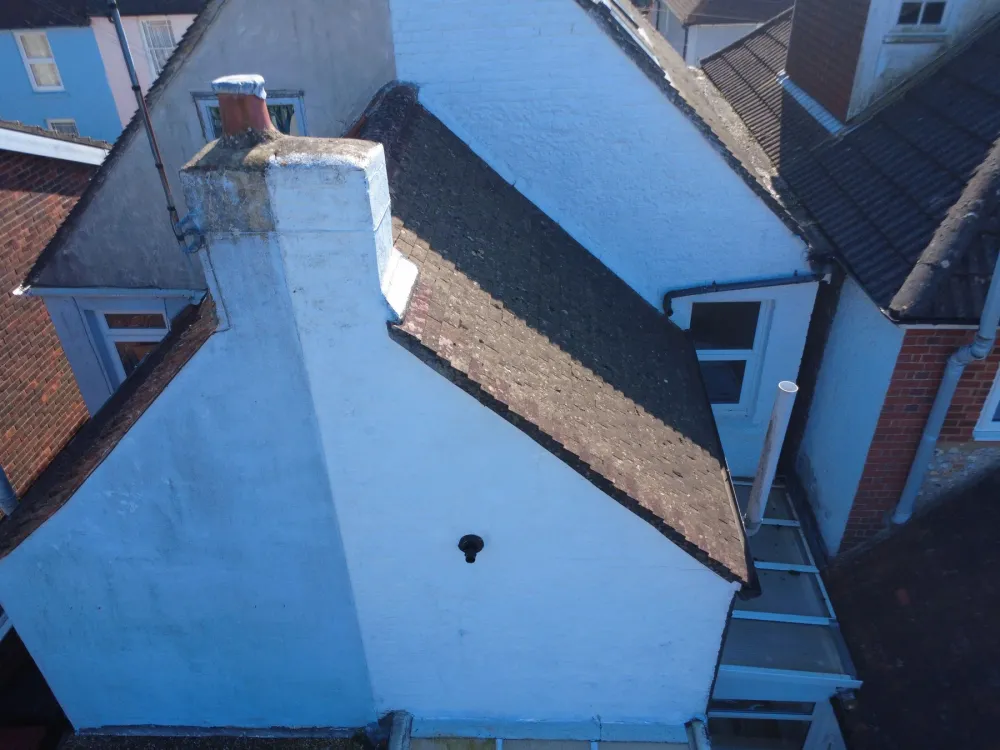
Damp investigation during a Level 3 building survey in Chichester
Moisture problems in a Victorian property
We were instructed to carry out a RICS Level 3 Building Survey on a mid to late 1800s house in Chichester. The property was of traditional solid-wall construction with rendered and painted elevations. As is common with buildings of this age, there was no evidence of a modern cavity wall construction and a damp proof course was unlikely to be present.
During our inspection we identified a number of moisture-related defects that required further investigation and budgeting by the prospective purchaser before exchange of contracts.
What was found?
High moisture readings were recorded in several locations within the property, particularly adjacent to the front entrance door and to the rear kitchen walls. Elevated moisture readings were also recorded within the kitchen floor area adjoining the affected walls. These findings were considered a material issue requiring further investigation before purchase.
The survey concluded that the dampness was unlikely to be attributable to a single defect. Instead, several contributing factors were identified, including:
- Blocked sub-floor ventilation.
- Vegetation growing directly against the walls.
- Moisture-retaining external finishes.
- Defective external door seals.
- Inadequate extraction and ventilation.
- The natural behaviour of traditional solid-wall construction.
Why Victorian properties need a different approach
Many older properties are wrongly diagnosed as suffering from "rising damp" when the true causes are more complex.
This property was constructed using traditional solid masonry walls which rely upon breathable materials and natural evaporation to manage moisture. Modern waterproof coatings, tanking systems or inappropriate damp-proofing treatments can sometimes worsen problems by trapping moisture within the building fabric.
Our investigation highlighted the importance of identifying and eliminating the source of moisture before carrying out cosmetic repairs.
External defects contributing to dampness
Several external issues were identified that were likely contributing to moisture retention within the structure.
The suspended timber floor ventilation was partially blocked due to obstructed air bricks. Poor sub-floor ventilation can create damp conditions beneath floors, increasing the risk of decay and elevated moisture levels within adjacent walls. Additional ventilation was recommended.
Vegetation was growing directly against external walls and around ventilation openings. We recommended removing vegetation and ensuring all air bricks were cleared and functioning correctly.
Internal moisture risks
The kitchen lacked an externally venting extractor fan, meaning moisture generated by cooking was likely being released into the property. In period properties, inadequate extraction can significantly increase condensation and moisture retention within walls and roof spaces.
In addition, evidence of condensation-related issues was noted within the roof space.
The inspection identified staining consistent with historic or ongoing condensation caused by inadequate loft ventilation.
Secondary moisture concerns
Our survey also identified dampness associated with the rear chimney stack.
Despite prolonged dry weather before the inspection, significant moisture retention was present at the base of the rear chimney. The likely causes included deteriorated flashings and poor flue ventilation. Further investigation and repairs were recommended.
Recommended solution
Rather than recommending chemical damp-proofing or waterproof coatings, our advice focused on identifying and addressing the causes of moisture.
Recommended measures included:
- Removing vegetation from external walls.
- Clearing and improving sub-floor ventilation.
- Repairing defective door seals.
- Installing suitable kitchen extraction.
- Improving roof space ventilation.
- Investigating and repairing the rear chimney.
- Allowing affected solid walls to dry naturally before replastering with breathable materials.
For the affected internal walls, we advised that modern plaster may ultimately need to be removed once sources of moisture had been addressed, with replacement using a breathable lime-based plaster system more suited to traditional construction.
Outcome
The survey provided the purchasers with a clear understanding of the moisture-related risks affecting the property and helped avoid the common mistake of treating symptoms rather than causes.
By identifying the likely contributing factors and recommending an appropriate repair strategy, the buyers were able to make an informed decision regarding the property and budget appropriately for remedial works.
Related services
- Damp & Mould Investigations
- RICS Level 3 Building Surveys
- Specific Defect Reports
- Period Property Surveys
Related locations
- Bosham
- Fishbourne
- Emsworth
- Havant
- Petersfield