
Energy efficient homes; air source heat pumps
Is an air source heat pump a worthwhile investment for my home?
As surveyors, we are increasingly asked whether an air source heat pump (ASHP) is a worthwhile investment for residential property owners. With the UK Government encouraging the transition away from fossil-fuel heating and offering financial incentives towards installation, heat pumps have moved from being a niche technology to a mainstream consideration. However, while air source heat pumps can deliver significant environmental and energy-efficiency benefits, they are not suitable for every property. Homeowners should carefully consider both the advantages and the limitations before proceeding.
Energy efficiency - here’s how it works
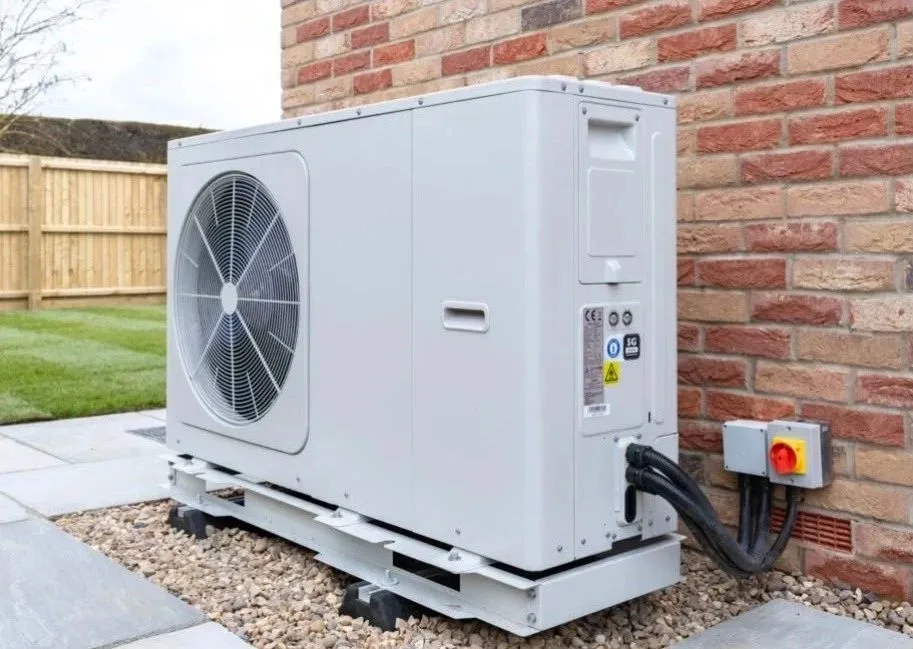
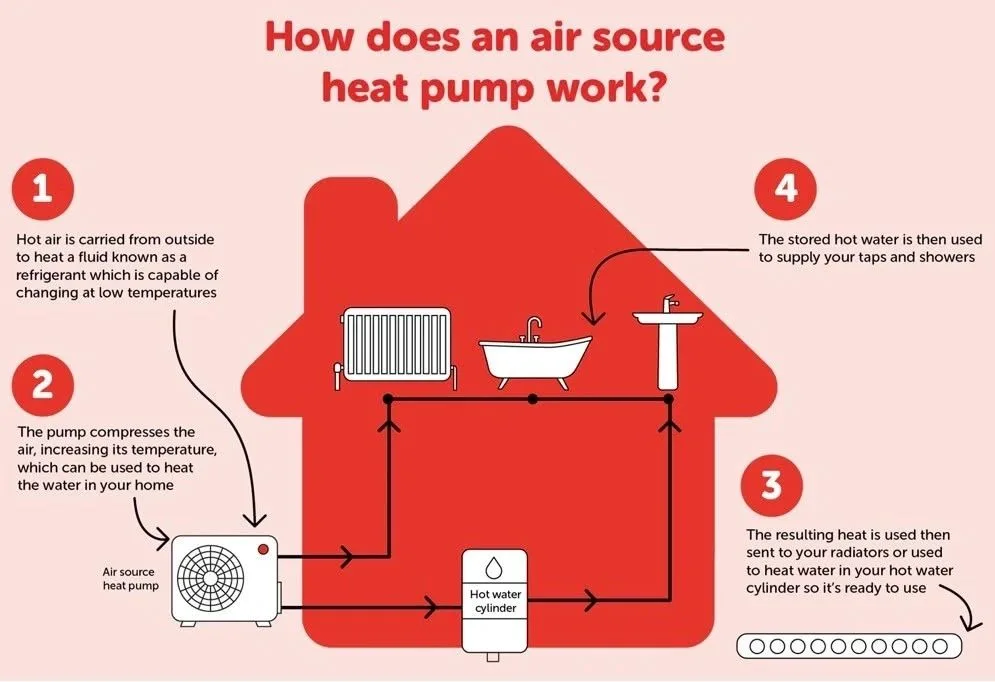
An air source heat pump works by extracting heat energy from the outside air and transferring it into the property’s heating and hot water systems. Unlike a conventional gas or oil boiler, which generates heat by burning fuel, a heat pump simply moves existing heat. This makes the technology considerably more efficient, with many systems capable of producing between three and four units of heat for every unit of electricity consumed.
One of the principal advantages of an air source heat pump is its environmental performance. Heat pumps produce no direct carbon emissions at the point of use and, as the UK’s electricity generation continues to incorporate more renewable energy sources, their carbon footprint is becoming progressively lower. For environmentally conscious homeowners seeking to reduce their reliance on fossil fuels, this represents a significant benefit.
Energy efficiency is another key attraction. A modern heat pump can operate at efficiencies far exceeding those of traditional boilers. When properly designed and installed, a heat pump can provide comfortable and consistent heating whilst consuming relatively modest amounts of electricity. In suitable properties this may result in reduced heating costs, particularly where the dwelling is currently heated by oil, LPG or direct electric systems. Many owners also choose to combine heat pumps with solar photovoltaic panels to further reduce running costs.
Financial support from the government; the Boiler Upgrade Scheme
Government support has also played an important role in increasing the popularity of heat pumps. At the time of writing, grants are available through the Boiler Upgrade Scheme, helping offset a proportion of the installation cost. Together with the current zero-rate VAT treatment on qualifying energy-saving measures, the financial case for installation has become more attractive than in previous years.
Despite these advantages, it is important to recognise that heat pumps are not simply a direct replacement for a gas boiler. The suitability of the property itself is perhaps the most important consideration. Heat pumps perform most effectively in buildings with low heat loss. Therefore, a home with inadequate insulation, draughts or older construction methods may require significant improvement works before optimal performance can be achieved.
Practical considerations from Kenny Relf Surveyors; you can talk to us
In practical terms, many installations require larger radiators or even underfloor heating because heat pumps typically operate at lower water temperatures than conventional boilers. Existing pipework may also require modification. These additional works can substantially increase the overall installation cost and should be identified through a detailed heat-loss assessment before any commitment is made.
Space requirements are another factor that prospective purchasers should consider. Most air source heat pumps require an external condenser unit as well as internal space for a hot water cylinder. Whilst this is often straightforward in larger detached or semi-detached properties, it may prove challenging in smaller houses, apartments or homes with limited outdoor space.
Installation costs remain relatively high when compared with replacing an existing boiler. Although grants can significantly reduce the financial burden, homeowners should still budget for a substantial upfront investment. Furthermore, the quality of system design is critical. Poor sizing, inadequate controls or incorrect commissioning can result in disappointing performance and increased running costs. A heat pump should therefore always be designed and installed by competent specialists with experience of low-temperature heating systems.
Homeowners can speak to Kenny Relf Surveyors about their property improvement plans
In conclusion, air source heat pumps represent an important technology in the UK’s transition towards lower-carbon housing. For well-insulated properties with suitable heating systems, they can provide excellent energy efficiency, reduced carbon emissions and potentially lower running costs over the long term. However, they are not a universal solution. Before installation, homeowners should carefully assess the suitability of the property, the likely upgrade costs and their own heating expectations. From a surveying perspective, the most successful projects are those where the heat pump is viewed as part of an overall property improvement strategy rather than simply a replacement for an existing boiler.